

It pays to be skeptical in today’s world of AI slop and bogus gadgets. After all, you don’t want to chase after every shiny new thing; you want to build an operation that’s both resilient and profitable. Technology offers countless opportunities to make this happen, and you don’t have to rely on fads or drain your budget to scale.

The era of suggested AI transparency has officially ended. Nowadays, opening the hood of your digital operations isn’t just a best practice—it is the law. The age of the black box is being dismantled by global regulators who are now forcing companies’ AI to show its work.

AI has moved past the buzzword phase and into the plumbing phase. It is no longer about what an AI can say; it is about what it can do. But as the industry races toward total autonomy, the gap between a productivity breakthrough and a systemic breakdown has become a razor-thin edge.

For most businesses, integrating artificial intelligence isn’t just about picking the right software; it’s about doing what you can to properly feed the beast. AI runs on data, and if that data is a chaotic mess, your expensive tools will be trying to solve a puzzle with half the pieces missing and the other half upside down.
Imagine finalizing a high-stakes client proposal, only to realize—seconds before the ink dries—that your AI assistant generously included a 50 percent discount on your most profitable service. It sounds like a corporate fever dream, but in the world of unmanaged AI, it is a very real possibility. While artificial intelligence is a powerhouse for productivity, it is only an asset if there is a human at the wheel. Without a sanity check, AI can quickly transition from a helpful tool to a liability.

The AI honeymoon phase is officially over. In 2026, the question isn’t whether your business is using AI, it’s whether you’ve handed it the keys to the building without a background check. As IT providers, we’re seeing a surge in emergency room calls from companies that treated AI as a set-it-and-forget-it miracle. To keep your organization from becoming a cautionary tale, you need to stop trusting the machine blindly and start managing it strategically.

Remember Tay? Microsoft’s 2016 AI chatbot that the internet turned into a wildly offensive, racist mess in just 16 hours? It was a spectacular, public failure that proved one thing: Garbage In, Garbage Out. Today, the garbage isn’t just on Twitter. It’s the highly sensitive, proprietary data your own employees are accidentally leaking into the public domain.
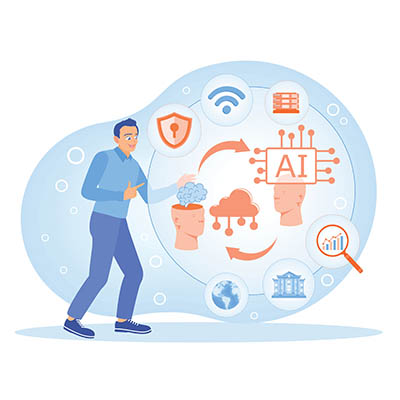
Good luck going about your day without hearing how AI is changing the workplace as we know it; let alone running a business without considering its useful applications. While you might feel pressured to adopt AI, we want to urge you to think before you act. Doing so could prevent you from investing money into a solution that doesn’t help your business in the slightest. To find out if AI is an appropriate next step for your business, consider these steps:

Artificial Intelligence (AI) has moved from science fiction to a daily reality, fundamentally reshaping how we work and communicate. Yet, behind every groundbreaking AI application lies massive infrastructure in the form of data centers. These sprawling facilities, packed with servers, storage, and networking equipment, aren’t just filing cabinets for data; they are the engines that make AI possible. Today, we are going to look at the data center and the pros and cons society will see from the expansion of AI.
If you’ve played with AI for any purpose, but particularly for your business’ benefit, you may have found your results less than impressive. One of the biggest challenges of working with artificial intelligence is our assumption that our instructions are sufficient, even when they are vague or non-specific. A prompt of this caliber will not produce the quality responses that you need. Instead, you need to use “prompt engineering” to come up with a request that will. Fortunately, you can improve your prompts considerably by simply remembering three things.