

When your team members are trying to hit tight deadlines, they want the path of least resistance. Often, that means saving critical files to their local desktop or a personal cloud account to avoid network latency or deep folder hierarchies. It seems harmless on the surface. However, storing company information on local drives creates major operational risks for your business.
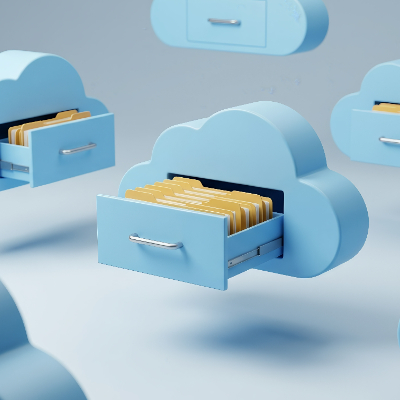
Moving your company files into cloud storage like Microsoft OneDrive or Google Drive is a huge milestone, but without basic folder rules, it quickly turns into digital chaos. Searching for misplaced files drains hours of staff productivity. Simple file rules fix that fast.

Microsoft is officially pulling the plug on Publisher on October 13, 2026. This “End of Life” event officially marks the end of support for the long-running desktop publisher. If your team relies on Microsoft Publisher to create flyers, brochures, or newsletters, this retirement will impact your business. Understanding what this change means—and taking a few proactive steps today—will keep your network secure and prevent your design files from becoming inaccessible.

Securing an office network used to mean setting up a perimeter firewall, enforcing user passwords, and assuming everything inside the building was safe. For years, that was standard practice. Today, that strategy fails to protect modern business operations.

What goes through your brain when you think of data theft? Chances are it’s probably some hacker in a dark room wearing an even darker hoodie, staring at lines of code well into the night. This misconception of data theft is the exact opposite of the reality; data exfiltration is incredibly boring, quiet, and sometimes completely invisible to the untrained eye. Instead of happening overnight, it will happen over the course of 30 days or longer, and it’ll happen right under your nose if you’re not paying attention.
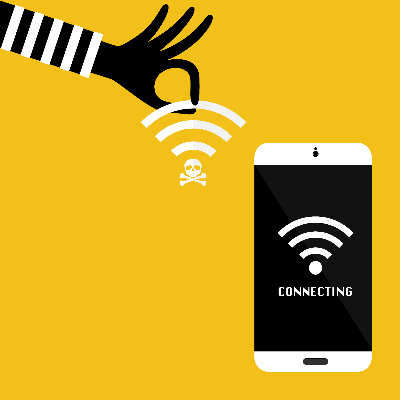
Connecting to a public Wi-Fi network is, at best, a roll of the dice, and more often than not, foolhardy and actively dangerous. Meant as a convenience, it is most convenient for someone trying to monitor your network traffic. These networks, maintained by a third party, are left wide open by design… making them in no way trustworthy, particularly for business purposes.

We have all seen the headlines about what AI can do. It can write emails, analyze spreadsheets, and generate images in seconds. We rarely talk about the physical requirements for that to happen. When you ask a chatbot a question, you are triggering a massive chain reaction of resource consumption.

Think of your digital security like your skincare routine or your gym habits: it is all about consistency over intensity. You don’t need a million-dollar setup to stay safe; you just need to stop leaving the metaphorical front door unlocked. Since the line between work life and real life is nonexistent these days, one weak password on a random app can give a hacker the keys to your entire company’s kingdom. You should spend the next seven days on this digital hygiene sprint because it is low-effort, high-reward, and honestly, you owe it to your future self.

It feels good to be right. It feels even better to have an assistant that never argues, never pushes back, and seems to be on your exact wavelength 24/7. We have a name for a system that never disagrees with you: a broken one. The reality is that AI lacks a moral compass or a personal creed. It doesn’t have a “gut feeling” telling it when you’re about to make a massive business mistake. It operates purely on a map of mathematical probabilities, designed to reflect your own intent back to you with perfect clarity.

For most businesses, integrating artificial intelligence isn’t just about picking the right software; it’s about doing what you can to properly feed the beast. AI runs on data, and if that data is a chaotic mess, your expensive tools will be trying to solve a puzzle with half the pieces missing and the other half upside down.