

We’ve all been there. You are staring at your screen, something isn’t working right, and you hesitate to ask for help because you think your question sounds silly. Today is Ask a Stupid Question Day, and I am here to tell you that in the world of business technology, keeping quiet is the only actual mistake you can make.

Running a business keeps you busy, making it easy for tech blind spots to quietly sneak up on your operations. The good news? Fixing the most common technology mistakes doesn’t require a massive budget—just a few simple adjustments.
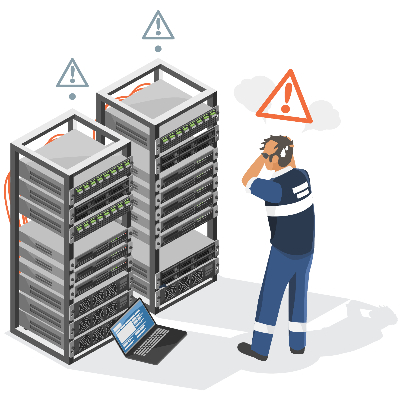
When a central server fails, daily business operations grind to an immediate halt. Most business owners take comfort in knowing a nightly backup runs in the background. However, having raw files saved on an offsite drive is only half of the equation when unexpected downtime strikes your network.

Navigating a cyber insurance policy renewal used to involve answering a few straightforward questions about your basic antivirus software. Today, insurance underwriters require detailed evidence of comprehensive security controls before they will even consider approving your coverage.

When your technology isn’t pulling its weight, your team ends up working twice as hard just to maintain normal output. We all recognize the obvious disruptions, but the quiet, constant tech delays hiding inside your daily routine often inflict far greater damage on your business. Let’s review some of these delays… and how we can help you resolve them.

A sudden technology failure can halt your daily operations without warning. When a central network appliance drops its connection, or an employee workstation stops responding, your entire business experiences an immediate slowdown. Orders cannot be filled, invoices cannot be issued, and client inquiries remain unanswered. For a small business, these unexpected halts do not just create temporary frustration. They stall your financial growth and force your management team into an expensive, stressful scramble to restore basic connectivity.

If you are a business owner, you probably manage hundreds of different online accounts. Yet, tech experts like me expect you to have a completely unique, random password for every single one! It is a lot to handle. It is also a rule that every single person on your team needs to follow to keep your business safe. A password manager, which is software that stores your logins securely, is the easiest way to manage this requirement.

As a business owner, you probably manage hundreds of different digital assets, vendor relationships, and daily operational fires. Yet data security standards require you to navigate a complex matrix of cybersecurity rules just to let a customer swipe their card. If your business accepts Visa, Mastercard, American Express, or any other major credit card, you have likely run into a frustrating acronym: PCI DSS. It stands for Payment Card Industry Data Security Standard. Let’s look at this standard through the lens of a business owner and see why it actually matters.

“Our systems are running okay right now. Let’s just wait and see how things go before we invest in upgrading our IT.” Whenever we see this sentiment echoed in the small business community, our technicians break out in a cold sweat. The wait-and-see approach might seem fiscally conservative and responsible, but in reality, it’s anything but. It’s not a strategy; it’s unhedged financial liability.

When we talk about IT security or business continuity, the conversation often gets lost in technical jargon like encryption layers or redundancy. For a business owner, these can often feel like abstract costs rather than strategic investments. Downtime, however, is one number that you don’t want to feel abstract, and it shouldn’t be treated as such. To justify your IT spending, you need to know how much revenue your business is leaving on the table due to technical issues.